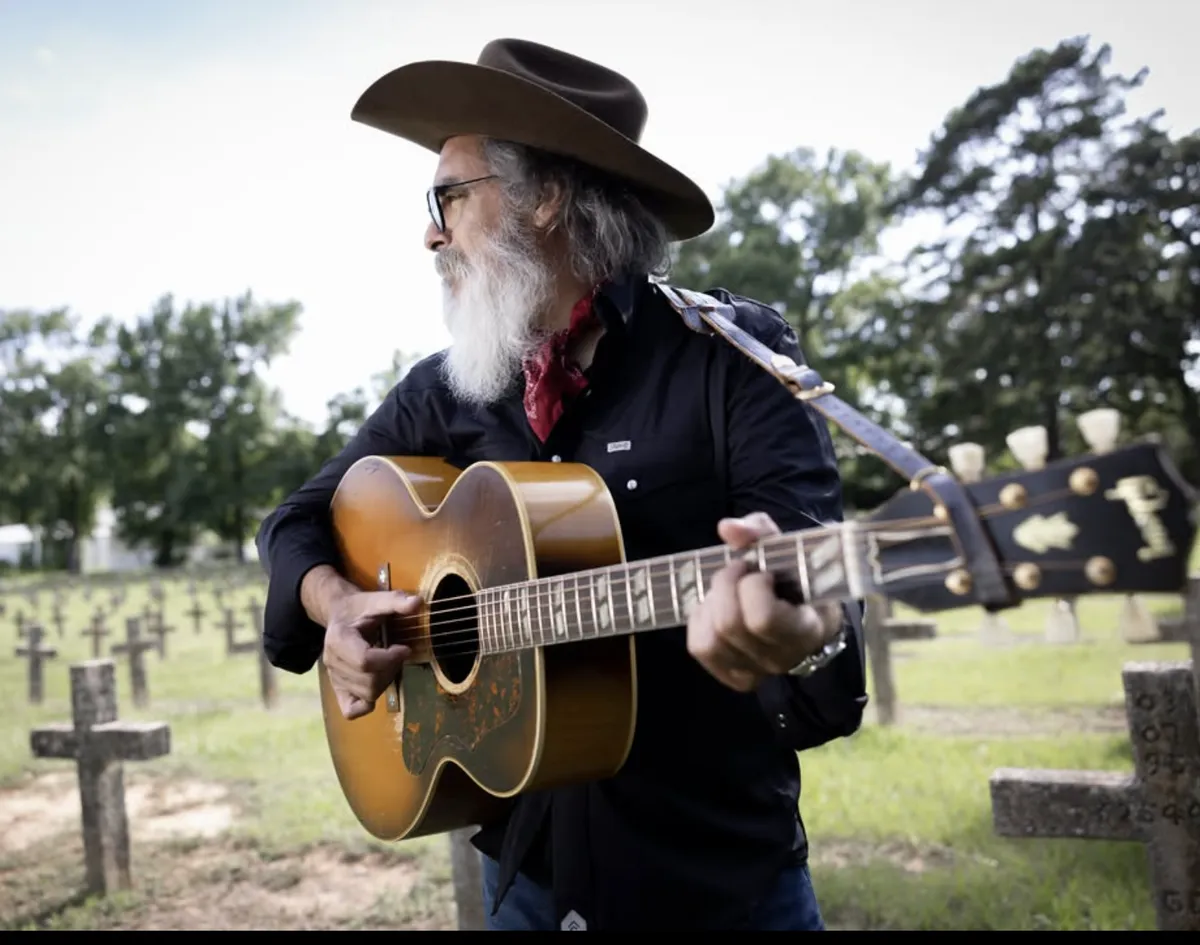
Review: "Coyote" by Chuck Leah
Chuck Leah's "Coyote" - The Wild Side of Grit and Guitar
Dripping with burning flavors and textured with Texas blues, "Coyote" weaves a tale of foreshadowing over slide guitar and a stomping rhythm, all seasoned with deep-throated vocal chants. The video version is a must-see. "Coyote" (Blue Hour Music) is a haunting, contemporary anthem of survival, transformation, and redemption. The feeling captures raw Texas grit at its absolute finest, a dark, driving blend of folk-blues and Hill Country Texas rock, featuring weathered, parchment-textured vocals, unplugged slide guitar, and moaning foot-stomp beats. His studio albums span genres that include folk-rock, folk, Americana, and Depression-era blues. He has a day gig as a paleontologist and has lived and worked in Italy, Los Angeles, Nashville, Austin, Puerto Rico, Minneapolis, and Houston. I am new to this artist, leafing through Chuck Leah's catalog, what I hear could also be folk-rock, country, Cajun, jazz, blues, Tejano, MexiCali and rock ‘n’ roll. As a fan, I am here to stay.
On the studio recording for “Coyote” the musicians joining Chuck Leah are Larry Campbell on Lead Guitar, Slide Guitar, Mandolin and Handclaps; Aaron Sterling on Drums and Percussion; Eric Finland on Hammond Organ, with Vocals by Armand Hutton, Ronnie Robertson, Samson White and Elvie Williams.
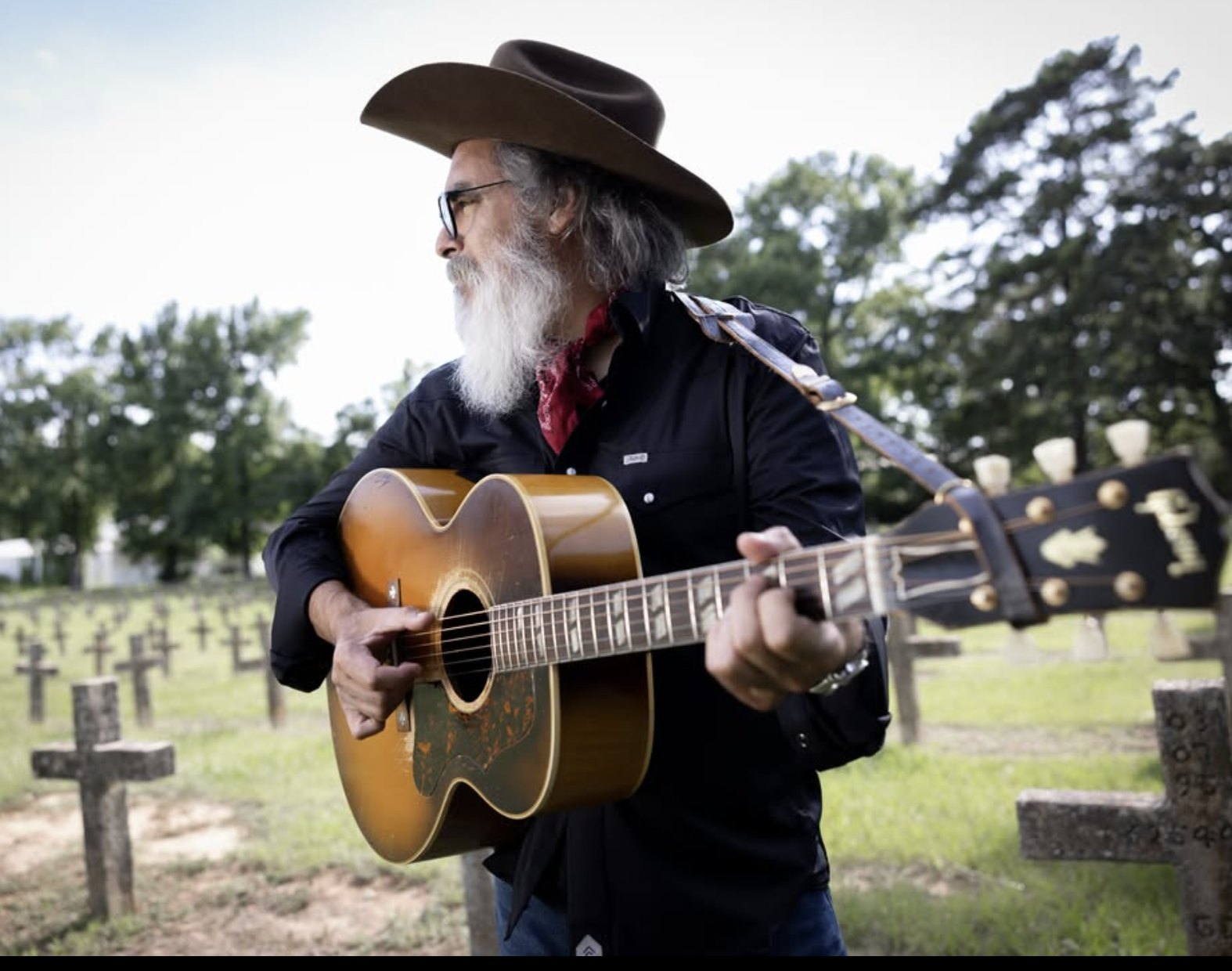
Leah recorded for the first time around the age of 10, getting his start playing bass for various Texas bands. He was born in the small town of Weslaco, Texas on October 18, 1972. His main instruments include electric, acoustic, and bass guitar, mandolin, organ, and keyboard. Beginning in the 1980s, Leah toured with and played bass for a number of bands and artists. In the 1990s, Leah played in the American country-rock band Tumbleweed. Later, in the 2000s, Leah began to work with the Minnesotan group Traveled Ground as producer and musician. Leah recorded his album, High Stakes, in Minneapolis, Minnesota in 2015. High Stakes was self produced, with musician and composer Jeff Victor, and sound engineer Evan Bakke. In 2019, Leah composed and performed an original, live score for the Houston Museum of Natural Science’s presentation of the 1922 silent film Nosferatu. Nothing was the same after that. In 2020, Leah recorded Band of Ghosts at the Power Station New England in Waterford, Connecticut, produced by Chuck Leah and Evan Bakke through their record label Dos Pistolas. Leah's ensemble here includes Jeff Victor, Soul Asylum’s Jeremy Tappero, singer Jenn Bostic, Sam Nitsch and bassist Michael Visceglia.
They say that Leah bottles genre-straddling, wanderlust Americana with innate musicality and startling sincerity. I can feel it, and from the first listen I was all in. In the video, the coyote roams freely, watching from the shadows. The merry coyote portends danger at the door, and at any moment, your whole world could come crashing down.
This is a song that would have fit right into the soundtrack of the film Sinners. I hear the low voices of men, woe woe woe. Combined with the video's graveyard imagery, I see layers of meaning. The graves are all arranged together in a group with identical markers. The green plants symbolize new and abundant life, growing everywhere possible. The coyote, the trickster and outsider, brings chaos as well as levity and freedom. The perspective changes on the beat, the feeling is from a dark Americana from the blues-folk tradition, but placed in a right here right now kind of way. None of the lyrics are specifically about the graveyard, but the images of the rows of crosses really stand out and connect in a dark way.
As the video plays, the locations change, from the graves, to a bright warm spring green hill, to some old wooden buildings. Leah is playing and walking the track, then sitting against a brick wall, then out back leaning against an old wooden wall, sitting on the porch playing, playing and walking the porch, back to the cemetery, back out behind the shed. Best to keep moving when the coyote is tracking you.
"Coyote" captures the tension between mortality and the vibrancy of life in a fresh, immediate way.
